
Buying a Home on a Hill Country Lot in Boerne? Look Beyond the View
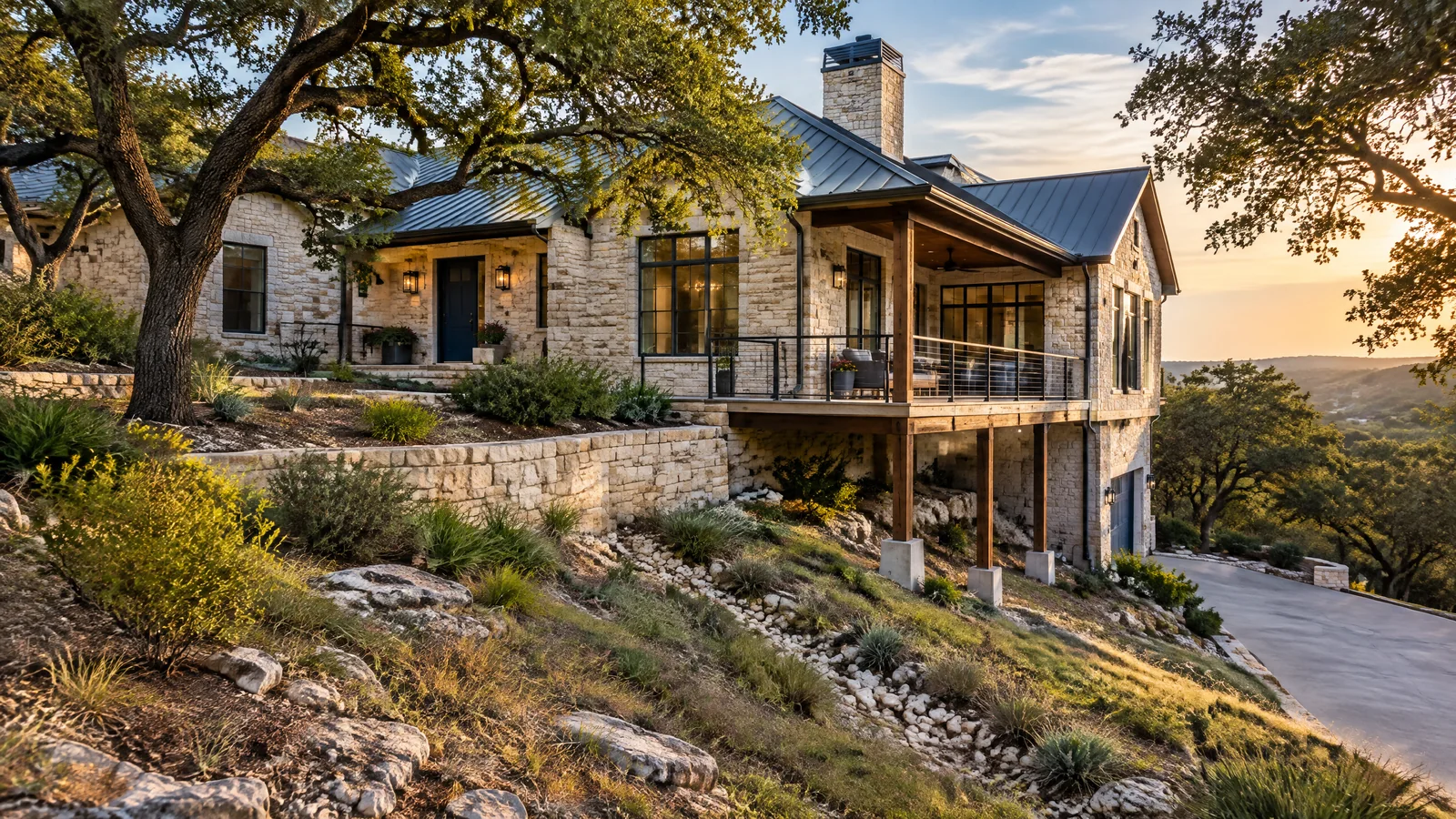
The lot is part of the house
One of the reasons people are drawn to Boerne is the land itself. Rolling terrain, limestone, mature trees and wide Hill Country views can make a property feel completely different from a flat suburban lot. But the same features that make a site attractive can also affect drainage, foundations, retaining walls, driveways and even how easy the home is to maintain.
When evaluating a house in Boerne, it helps to stop thinking of the structure and the lot as two separate things. On a sloped property, they are connected. Water coming off the uphill side has to go somewhere. Soil placed behind a retaining wall needs a way to drain. A driveway cut into a slope has to shed water without sending it toward the garage. A beautiful rock terrace may be decorative, structural, or a little of both.
Retaining walls deserve more than a glance
Retaining walls are common on properties where builders or homeowners have created level areas out of sloping ground. Small landscape walls are usually simple, but taller walls can be carrying a significant load. Bulging, leaning, cracking, separated blocks or washed-out soil can indicate that a wall is not handling pressure or drainage well.
Water is often the hidden issue. If drainage behind the wall is poor, pressure can build after repeated rain. The wall may not fail dramatically; it may move slowly over years. Buyers should also pay attention to what sits above and below the wall. A wall supporting a driveway, patio, pool area or part of the house deserves more scrutiny than a short decorative border around a flower bed.
Rocky ground does not eliminate foundation concerns
There is a common assumption that a home built in rocky Hill Country terrain cannot have foundation movement. Real homes are more complicated than that. Lots may contain rock, fill material, soil pockets and areas that were cut or built up during construction. Drainage can vary significantly from one side of a property to the other.
During an inspection, the important clues are the condition of the foundation, visible cracking, floor performance, doors and windows, masonry, drainage and any signs that portions of the site are moving differently. A crack by itself is not a diagnosis. The surrounding conditions provide the context.
Pay attention to roofs, decks and elevated exterior spaces
Sloped sites often produce interesting architecture—raised decks, balconies, long exterior stairways and homes with one side much higher above grade than the other. Those features need regular maintenance. Deck connections, guardrails, stair framing and support posts should be evaluated for deterioration and secure attachment. Water should not be allowed to sit where wood framing meets the home.
Roof drainage matters as well. On a hillside, dumping water on the wrong side of the house can create erosion, undermine landscaping or send runoff across a walkway or driveway. Extensions, swales and other drainage features need to work with the site rather than simply move water a few feet away.
Enjoy the view—just inspect the terrain too
A Hill Country property can be a terrific place to own a home, and many of the features that make Boerne distinctive are strengths, not problems. The key is understanding that the land is an active part of the property.
Before closing, look beyond the stone exterior and the view from the back porch. Notice where the lot rises, where it falls, where water is likely to travel and what structures are holding soil in place. A careful home inspection can help connect those observations to the condition of the house so you know what is normal maintenance, what needs attention, and what deserves a specialist's opinion.